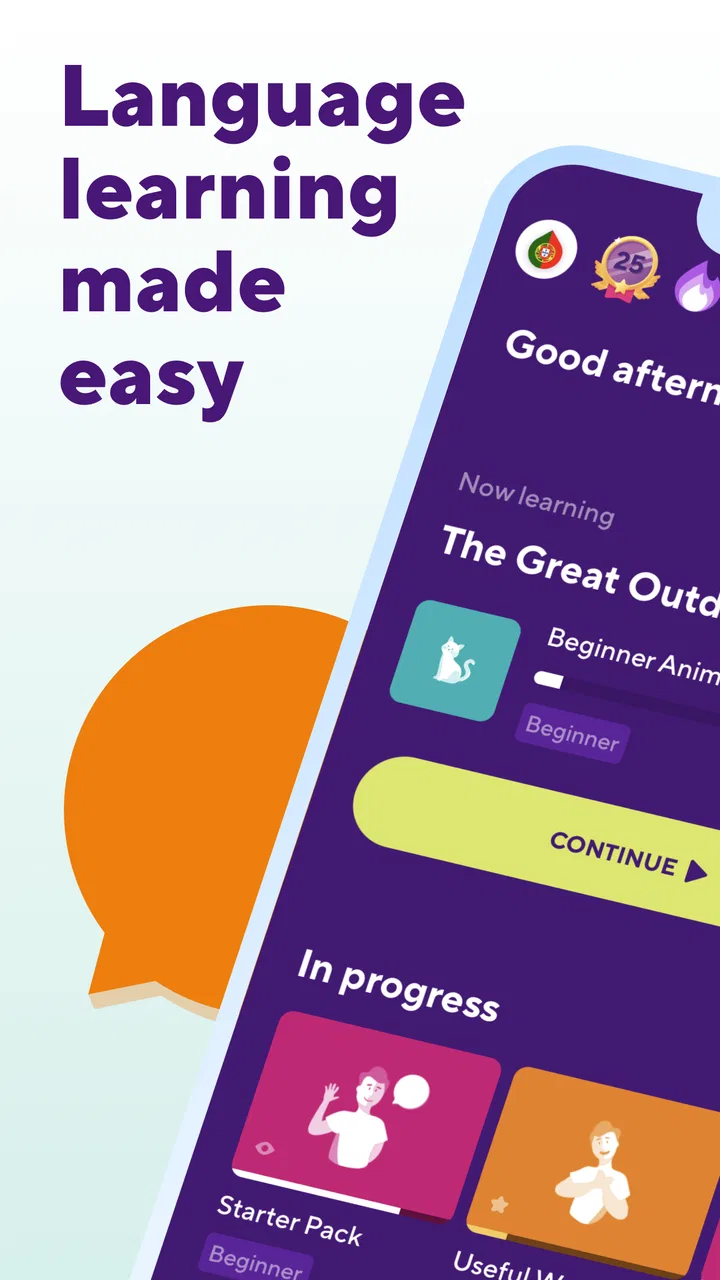
Drops: Language Learning Games
- 4.3
- Rating
- 10.00M
- Installs
- Free
- Price

 Analysis by App-foxy
I noticed the appeal of Drops: Language Learning Games almost immediately: it turns a language session into a short visual exercise instead of asking me to sit through a traditional lesson. That difference matters when I am tired, commuting, or only have a few spare minutes. The app belongs to the Education category, is free to start, and is suitable for Everyone, so it feels approachable for casual learners as well as students who want an extra daily tool.
My first impression was positive, but the more important question is whether an app like this deserves a permanent place on a phone after the novelty wears off. In my experience, Drops is strongest as a vocabulary-maintenance companion. It can make daily practice easier to begin, especially for learners who dislike dense grammar explanations, but it should not be mistaken for a complete replacement for conversation practice, reading, listening, or structured courses.
From an enjoyable first week to a realistic long-term habit
After the enjoyable novelty of starting a new language settles, I find it useful to judge Drops by whether it still fits an ordinary week, not by how much I do in a burst of motivation. A small routine tied to one practical goal can make its visual practice feel more purposeful and less like tapping for its own sake. That longer view also makes it easier to decide whether the app’s format continues to suit your schedule and attention.
You May Also Like

 Blood Strike: 2.5 Anniversary
Blood Strike’s Loadouts Turn Every Drop Into a Tactical Gamble
A close look at Blood Strike’s custom loadouts: how fast access to signature weapons reshapes its battle royale rhythm, rewards preparation, and narrows the gap between fights.

 Pandora - Music & Podcasts
Pandora’s Music Is Easy to Start, but Harder to Recover
Pandora’s strength is its low-effort path from a seed to a station. Its weak spot is how much confidence it asks you to place in connection, setup, and quiet recovery.

 8 Ball Pool
 Is Built on Rivalries, Rematches, and Routine
A close look at the rivalries, rematches, shared routines, and unanswered safety questions that turn a quick pool match into a persistent mobile community.

 Samsung Music
’s Quiet Strength Is Playing What You Already Own
Its reach comes less from spectacle than from dependable access to a personal library. That simplicity is both the app’s strongest retention engine and its ceiling.

 AccuWeather: Weather Radar
AccuWeather Review: A Quick, Clear Forecast for Everyday Decisions
For everyday plans, the best forecast is the one you can understand quickly. AccuWeather makes rain timing, radar, and local conditions easy to act on, with a few trade-offs.

 Hill Climb Racing
Why Hill Climb Racing Still Turns Crashes Into One More Run
A tiny car, a bumpy hill and one more upgrade: Hill Climb Racing keeps resurfacing because its simple chaos makes every near-miss feel personal.
More From Our News Desk
View All News


Why the opening sessions feel so accessible
The design puts visual recognition and quick interaction at the center. Rather than starting with a long explanation, I can work through words in compact bursts and connect them with images and repeated prompts. That makes the first week feel less intimidating than opening a textbook filled with unfamiliar sentences. I do not need to prepare a study plan before beginning, and the low-friction format makes it easier to practice when my attention is limited.
This is particularly useful for someone starting Spanish, German, Italian, English, or Japanese and wanting to build a basic store of everyday vocabulary. The app’s language selection gives it wider practical use than a tool focused on one language, although the experience is still best understood as vocabulary training rather than a full course. I found that the visual approach helped me remember the general meaning of a word quickly, while pronunciation and real conversational use required additional work elsewhere.
The developer, Drops Languages, has made the experience feel more like a sequence of small challenges than a conventional school assignment. That is a meaningful advantage during the first week. A learner who often postpones study may be more willing to complete a short session here than to open a grammar-heavy resource. The format also works well as a warm-up before a longer lesson: I can refresh familiar words first, then move on to reading, audio, or writing practice in another resource.
A practical routine for the first seven days
I would begin with one language and a narrow topic rather than jumping between everything available. For example, a learner preparing for travel could focus on food, transport, or basic places before adding unrelated vocabulary. Keeping the early sessions thematically focused makes it easier to notice which words are becoming familiar and which ones still need attention.
Another useful habit is to say each item aloud instead of tapping through silently. A visual answer can create the feeling that I know a word when I only recognize its picture. Speaking it, even imperfectly, exposes that gap. I would also pause after a session and try to recall a few items without looking at the screen. This simple step turns passive recognition into a more useful memory check.
The free starting point is helpful for testing whether the method suits you before spending money. The app is listed as free, while optional in-app purchases range from $0.99 to $269.99 per item. That broad range makes it sensible to explore the free experience carefully and decide whether the recurring routine is genuinely valuable before considering any paid option.
Where the novelty starts to fade
After the initial excitement, the central challenge becomes repetition. Visual cards and quick interactions are pleasant, but the same basic learning loop can feel predictable once the novelty of the interface disappears. That is not necessarily a flaw: repetition is essential for remembering vocabulary. Still, the presentation has to keep earning my attention, and some days it feels easier to tap through a session than to engage deeply with the language.
This distinction is important. Finishing a short activity is not the same as being able to retrieve a word during a conversation. I could recognize an item inside the app and still hesitate when trying to use it in a sentence. For that reason, I would treat every new group of words as raw material. After practicing, I would write a few simple sentences, search for examples in real content, or use the words with a conversation partner. Drops is more useful when it feeds those activities instead of becoming the only activity.
What gives it month-to-month value
The long-term value comes from maintenance rather than dramatic transformation. A learner who already has some basic knowledge can use short sessions to keep common vocabulary active, especially during a busy period when a full course is unrealistic. I like this role because it is honest: the app can help preserve contact with a language even when I cannot dedicate a long block of time to study.
A realistic everyday scenario would be using it while waiting for an appointment or during a quiet part of a lunch break. I would choose one small topic, complete a focused session, and then spend another minute recalling the words without prompts. That routine is small enough to repeat, but it still has a clear purpose. On a travel week, the same approach could help refresh practical vocabulary before a trip, while a student might use it between formal classes to keep recently introduced words visible.
Its audience numbers also suggest that the format has broad appeal: the app has passed 10 million installs, holds an average rating of 4.3 from around 318 thousand ratings, and has about 14 thousand written reviews. Those figures do not prove that it will work for everyone, but they do fit my impression that Drops is easy to approach and simple to return to. It is not built around making the learner wrestle with a complicated interface before practice can begin.
Month-to-month usefulness depends on changing the purpose of each session. At the beginning, I may use the app to discover words. Later, I should use it to strengthen weak areas, revisit vocabulary I repeatedly forget, and connect familiar items with sentences outside the app. If I only chase completion, the routine can become empty. If I use it as a reminder system for words that matter to my goals, it has a better chance of staying useful.
The maintenance burden is small, but not zero
The biggest advantage for habit-building is the low setup cost. I do not need to gather materials, choose a textbook chapter, or decide what to review from scratch. Opening the app and beginning a short practice session is straightforward. That matters because many language-learning plans fail before the actual study starts: the learner spends too much energy organizing and too little practicing.
However, the app does not remove the need for personal organization entirely. I still need to decide which language deserves attention, how vocabulary connects to my goals, and what to do with words after recognizing them. Anyone studying multiple languages should be especially careful. Switching between several options may feel exciting, but it can dilute the routine and make progress harder to judge. I would rather build a dependable habit in one language first than collect unfinished sessions in several.
There is also a maintenance burden outside the interface. Vocabulary needs context, sound, and use. I would pair Drops with graded reading, short listening clips, written messages, or guided conversation. A learner seeking grammar progression should choose a course that explains sentence structure more directly. Someone preparing for an exam should check that their main study resource covers the required skills, because a vocabulary-focused app alone will not provide a complete preparation plan.
Why some learners may feel fatigue
The first source of fatigue is the gap between quick recognition and active communication. If I expect the app to make me conversational by itself, disappointment is likely. The visual method is efficient for introducing and refreshing words, but real communication requires handling unfamiliar phrasing, choosing the right form, understanding speech at natural speed, and responding under pressure.
The second source is repetition without a personal purpose. Reviewing random vocabulary can become mechanical when the words do not connect to anything I actually want to say. I get more value when I select themes related to an upcoming trip, a hobby, work, or a current learning unit. That gives each session a reason to exist and makes it easier to notice the words later in real content.
The third issue is the temptation to measure progress by activity volume. A longer session or a more impressive streak can feel satisfying, but neither guarantees durable recall. I prefer ending while I can still remember the material and then testing myself later without visual help. Shorter, deliberate practice is often more sustainable than forcing a large amount of tapping in one sitting.
Paid options may also influence how comfortable the long-term experience feels. Since the app is free to start but includes optional purchases, users should consider whether the available free practice already supports their routine and whether any upgrade would solve a specific limitation. I would not pay simply because I enjoyed the first few sessions. I would pay only if I had used it consistently and knew that expanded access would support a clear learning goal.
Three ways to get more from the visual format
First, I would use a two-pass routine. During the first pass, I would focus on recognition and pronunciation. Later the same day or the next day, I would cover the prompt mentally and try to retrieve the word before confirming it. This changes the app from a picture-matching exercise into a small recall test, which is more demanding and more informative.
Second, I would create an external “use it” step. After a session about food, for instance, I could describe a meal in a few simple sentences or look for those words in a menu or beginner text. The point is not to produce perfect language. The point is to make the vocabulary leave the app. This is where I notice which words are truly available to me and which ones only feel familiar inside the exercise.
Third, I would use the app as a recovery tool after breaks rather than treating a missed day as failure. If I have been away from a language for a week, a short visual review can rebuild momentum more gently than opening an advanced lesson. That makes Drops valuable during irregular schedules, but I would still return to richer material once the habit is moving again.
Who should choose it, and who should look elsewhere
I would recommend it to beginners who want a friendly entry point, busy learners who need compact practice, and intermediate students who want to refresh vocabulary between more demanding activities. It is also a good fit for people who remember images well or who lose motivation when lessons begin with long explanations. The Everyone age rating makes it approachable for a broad audience, though the best results still depend on the learner’s willingness to speak and use the words beyond the screen.
I would be more cautious about recommending it as the main resource to someone whose immediate goal is fluent conversation, detailed grammar control, or formal assessment. In those cases, a structured course, tutor, conversation exchange, or dedicated listening program may be a better foundation. Drops can still fill a useful gap, but it should not carry responsibilities that belong to other learning methods.
I would also skip it if I know I dislike game-like repetition and prefer explanations, written exercises, or long-form lessons. The app’s style is part of its strength, but that same style can feel shallow to a learner who wants every mistake explained in depth. Choosing a tool that matches how I naturally study is more important than choosing one with a popular format.
Device fit, access, and what to expect
On Android, the listed minimum requirement is version 8.0, so the app is accessible on many devices that are not especially new. The current version is 39.18, which indicates an actively maintained product line without requiring me to treat it as a brand-new experiment. I would still keep expectations realistic: updates can improve an app’s experience, but they do not change the underlying need for consistent practice and outside exposure.
The free entry also makes the decision relatively simple. I can try the method, observe whether I return to it after the first week, and judge whether it helps with a real language goal. The important test is not whether the first session feels polished; it is whether I voluntarily open it during an ordinary, busy month. If I do, the app has earned a role. If I only use it when I am excited about starting a new language, it may be better treated as a temporary sampler.
My long-term verdict
I see Drops Languages as a strong vocabulary companion with unusually good habit potential, not as a complete language-learning system. Its short, visual sessions reduce the resistance that often stops people from practicing, and that is a meaningful benefit. The app can fit into small gaps in the day, help revive a neglected language, and give beginners a manageable first step.
Its lasting value depends on how deliberately I use it. If I tap through familiar pictures and count sessions without speaking, reading, or writing elsewhere, the benefit will eventually flatten. If I use it to build a focused vocabulary base, test recall, and then move those words into real sentences, it continues to earn its space month after month.
My recommendation is therefore conditional but positive: try the free version, choose one practical language goal, and judge it after the initial excitement has passed. The real test is whether Drops supports a repeatable habit rather than merely providing an entertaining first week. For learners who need a gentle daily nudge, it is worth keeping. For anyone seeking complete instruction, it belongs beside—not instead of—a broader learning plan.
FAQs for Drops: Language Learning Games
01What is Drops: Language Learning Games, and how does it work?
Drops is a visual vocabulary-learning app that teaches words through short, game-like sessions. Lessons use illustrations, animations, audio pronunciation, and quick interactions rather than long grammar explanations. You choose a language and study topic, then practice words in focused sessions that are designed to be easy to fit into a busy schedule. The app emphasizes repetition and recognition to help vocabulary become more familiar over time.
02Which languages can I learn with Drops?
Drops offers a broad selection of languages, including widely studied options such as Spanish, French, German, Italian, Portuguese, Japanese, Korean, Chinese, Arabic, and Russian, along with several others. Availability of specific courses and content can change, so it is worth checking the current language list in the app or store description before downloading. The depth of vocabulary may also vary between languages.
03Is Drops suitable for complete beginners?
Yes, Drops is generally suitable for beginners because lessons start with basic vocabulary and introduce words gradually through pictures, sound, and simple exercises. You do not need prior knowledge to begin. However, the app is primarily focused on vocabulary rather than complete language instruction, so beginners may eventually need another resource for detailed grammar, sentence construction, conversation practice, and broader comprehension.
04Is Drops free to use, or does it require a subscription?
Drops can usually be downloaded and tried for free, but free access is limited by features, lesson availability, or daily study time. A premium subscription unlocks additional content and removes many restrictions, depending on the current offer and platform. Subscription prices, trial terms, and billing conditions may differ by region, Android or iOS, and promotional period, so review the purchase screen carefully before confirming.
05Can Drops help me become fluent in a language?
Drops can be a useful part of a language-learning routine, especially for building and reviewing everyday vocabulary, but it should not be considered a complete path to fluency on its own. It provides limited practice in spontaneous speaking, extended listening, writing, grammar, and real conversations. For stronger results, combine Drops with reading, listening, speaking practice, and interaction with native or proficient speakers.
Pros
- Short game-like lessons make daily practice easy to maintain.
- Visual vocabulary exercises help connect words with their meanings.
- Courses cover useful vocabulary for travel and everyday conversations.
- Progress tracking and streaks can encourage consistent study habits.
- Audio from native speakers supports pronunciation and listening practice.
Cons
- The free version offers limited content and may require a subscription.
- Grammar explanations are less comprehensive than in traditional language courses.
- Some exercises can feel repetitive after extended use.
- Offline access may be restricted depending on the subscription plan.
- The app focuses mainly on vocabulary
- not extended speaking practice.

Drops: Language Learning Games
Gallery